
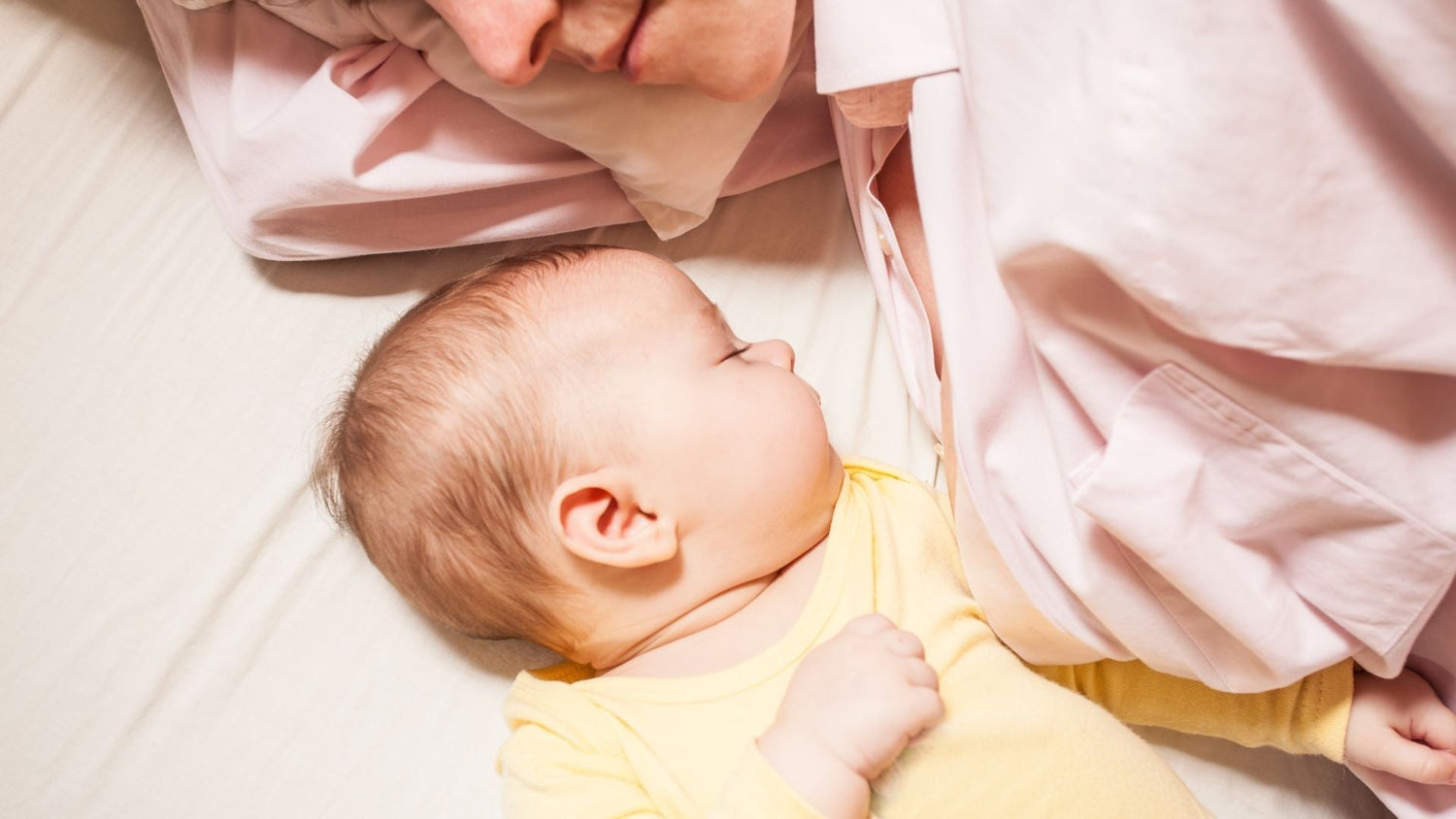
The topic of co-sleeping can spark passionate discussions in parenting groups, with advocates on both sides sharing strong opinions about what's "best" for babies and families. If you're considering co-sleeping or already doing it and wondering whether it's the right choice for your family, you're not alone in feeling a bit overwhelmed by conflicting advice.
Here's the truth: there's no one-size-fits-all answer when it comes to sleep arrangements. What works beautifully for one family might not suit another, and that's perfectly okay. Every family's circumstances, values, and needs are different, and the "right" choice is ultimately the one that works safely and happily for you and your little one.
This guide isn't here to tell you what you should or shouldn't do – instead, we'll explore the benefits and considerations around co-sleeping so you can make an informed decision that feels right for your family. Whether you're drawn to the closeness of co-sleeping, concerned about safety aspects, or simply curious about your options, understanding both sides of the conversation can help you navigate this important choice with confidence.
Understanding co-sleeping

Before we explore the pros and cons, it's helpful to clarify what we actually mean by "co-sleeping" – because it's not quite as straightforward as you might think. The term encompasses several different sleeping arrangements, each with its own considerations and safety implications.
Room-sharing
This involves your baby sleeping in your bedroom but in their own separate sleep space – perhaps a cot, Moses basket, or bedside sleeper. This arrangement keeps your little one close for feeding and comfort whilst maintaining separate sleeping surfaces. Many parents find this strikes a nice balance between proximity and safety, especially in those early months when night feeds are frequent.
Bed-sharing
Bed-sharing means your baby sleeps in the same bed as you. This might happen occasionally when babies are brought into the parental bed for feeding or comfort, or it might be a regular sleeping arrangement. Bed-sharing is what most people think of when they hear "co-sleeping," and it's the arrangement that tends to generate the most discussion.
Age considerations
The vast majority of families who co-sleep do so during infancy and early toddlerhood, typically from birth through to around age 2-3, though some continue longer. Many families start with room-sharing in the early weeks and might transition to bed-sharing as they become more comfortable, whilst others begin bed-sharing from the start.
It's worth noting that co-sleeping practices vary enormously across cultures and families. What might seem unusual in one context could be completely normal in another. Some families co-sleep out of practical necessity – perhaps due to housing situations or to make breastfeeding easier. Others choose it for emotional and bonding reasons, whilst some find themselves co-sleeping gradually as a response to their baby's sleep patterns.
The timing often evolves naturally too. You might start with firm intentions about independent sleep only to find that co-sleeping becomes a practical solution during growth spurts, illness, or periods of unsettled sleep. Alternatively, families who begin co-sleeping might transition to independent sleep as their child grows and circumstances change.
Benefits of co-sleeping
Many families who choose co-sleeping report genuine benefits that extend beyond simple convenience. Understanding these potential advantages can help you consider whether co-sleeping might suit your family's needs and circumstances.
Enhanced bonding and attachment
The close physical proximity during sleep can arguably strengthen the emotional connection between parents and babies, potentially supporting secure attachment development. Many parents describe feeling more attuned to their baby's needs and rhythms when sleeping close together. This heightened awareness can help parents respond more quickly to their baby's cues, whether for feeding, comfort, or simply reassurance.
Breastfeeding convenience
When babies sleep close by, night feeds become much more manageable – no stumbling down hallways in the dark or fully waking to tend to a crying baby. Many breastfeeding parents find they can feed their babies whilst remaining drowsy, leading to better rest for everyone involved. This can be particularly valuable during the early weeks when feeds are frequent and sleep is already fragmented.
Improved sleep quality
When babies feel secure and can access comfort easily, they may actually sleep more peacefully. Parents often sleep better too when they're not worrying about their baby sleeping alone in another room or getting up multiple times for feeds and comfort.
Cultural and family bonding
In many cultures worldwide, co-sleeping is the norm and is considered an important part of family life and child-rearing. For families from these backgrounds, co-sleeping might feel natural and aligned with their values about family closeness and child care.
It's important to note that these benefits are experienced differently by different families, and what feels beneficial to one family might not work for another. The key is understanding what matters most to your family and making choices that align with your circumstances and values.
Risks and concerns of co-sleeping
Whilst many families find co-sleeping beneficial, it's crucial to understand the potential risks and concerns that have led major health organisations to issue specific guidance about sleep arrangements. These considerations deserve serious attention when making decisions about your family's sleep setup.
Safety concerns
The primary worry relates to Sudden Infant Death Syndrome (SIDS) and accidental suffocation. Research has shown that certain bed-sharing situations can increase these risks, particularly when combined with other factors like parental smoking, alcohol consumption, extreme tiredness, or inappropriate bedding. Soft mattresses, heavy bedding, or gaps between the mattress and headboard can create unsafe conditions for babies.
The risk isn't uniform across all situations, however. This is why many health professionals distinguish between higher-risk and lower-risk co-sleeping situations rather than making blanket recommendations.
Sleep quality concerns
Some parents find they sleep more lightly when sharing a bed with their baby, worrying about rolling over or being hyper-aware of every sound. Babies might also sleep less deeply when sharing a bed, potentially leading to more frequent waking for everyone involved.
Dependency and transition challenges
There's concern that children who co-sleep for extended periods might find it more difficult to transition to independent sleep later on. Some families report challenges when trying to move children to their own beds, though others manage transitions smoothly.
Relationship and intimacy concerns
Sharing bed space with a baby naturally changes the dynamic of the parental relationship and might impact intimacy and couple time. Some parents find they feel touched-out or struggle to maintain connection with their partner when co-sleeping long-term.
Individual sleep needs
Whilst some babies sleep beautifully in the family bed, others might be naturally restless sleepers who disturb everyone. Similarly, some parents are naturally heavy sleepers who might not be suitable for bed-sharing, whilst others are light sleepers who respond quickly to their baby's movements.
Understanding these risks doesn't mean co-sleeping is inherently dangerous or wrong – rather, it means making informed decisions based on your specific circumstances and taking appropriate precautions when needed.
Practical guidelines and safe co-sleeping tips

If you've decided that co-sleeping works for your family, or you're currently co-sleeping and want to ensure you're doing so as safely as possible, these practical guidelines can help create the safest possible environment for everyone involved.
Safe room-sharing setup is generally considered the lower-risk co-sleeping option:
- Position your baby's cot or Moses basket close to your bed for easy access
- Consider bedside sleepers that attach securely to your bed
- Ensure appropriate room temperature for everyone
- Check that your baby's sleep space meets current safety standards
If choosing bed-sharing, safety considerations become more complex:
- Use a firm mattress with well-fitting sheets and minimal bedding
- Avoid duvets, pillows, or loose bedding near your baby
- Consider baby sleeping bags and lighter bedding for parents
- Ensure no gaps between mattress and headboard where baby could become trapped
- Consider bed rails if appropriate for your bed type
Creating boundaries and comfort
Some families designate specific sides of the bed for the baby, use pregnancy pillows to create gentle boundaries, or develop routines that help everyone settle comfortably. Pay attention to your baby's cues – some babies sleep better with more space, whilst others prefer close contact.
Transitioning strategies
This might happen gradually, starting with naps in a separate space, or more systematically using gentle sleep training methods. The Ferber Method (checking on your child at increasing intervals) can help some families transition, though many find gentler, more gradual approaches work better for children who are used to close contact.
Communication with healthcare providers is important, particularly if you have specific concerns about your baby's health or development. Being honest about your sleep arrangements allows healthcare providers to give appropriate guidance and support rather than generic advice that might not fit your situation.
Remember, safe co-sleeping requires ongoing attention and adjustment as your baby grows and your family's needs change. What works safely for a newborn might need modification as your child becomes more mobile and develops different sleep patterns.
When and how to stop co-sleeping
Many families who co-sleep eventually transition to independent sleep arrangements, though the timing and approach vary enormously between families. Understanding when and how to make this transition can help ensure it goes as smoothly as possible for everyone involved.
Recognising readiness signs
Recognising signs of readiness can help you identify when your family might be ready for change:
- Your child starts sleeping more restlessly in the family bed
- They seem ready for their own space or express interest in having their own room
- Parents feel ready for more privacy, better sleep quality, or space to themselves
- Natural life changes create transition opportunities (moving house, starting nursery)
There's no rush – these transitions can happen gradually over time.
Practical considerations
Moving house, the arrival of a new baby, starting nursery, or other life changes might naturally create opportunities for sleep transitions. Some families use these natural transition points as gentle ways to introduce new sleep arrangements without it feeling like a sudden change.
Maintaining connection
This might involve extended bedtime routines, special comfort objects, or check-ins during the night. Many children find transition easier when they don't feel they're losing parental connection entirely – just changing how that connection happens during sleep.
Managing emotional responses
Some children might feel anxious or sad about sleeping alone, whilst parents might feel guilty or worried about the change. These emotions are completely normal and don't indicate you're making the wrong choice. Most children adapt to new sleep arrangements within a few weeks when the transition is handled gently and consistently.
Maintaining familiar daily routines during this period can provide extra security and stability whilst your toddler adjusts to their new sleeping arrangement.
Creating positive sleep environments
This might involve letting your child help choose bedding, creating cosy reading corners, or establishing special bedtime routines that make their own space feel special and secure.
Remember, there's no need to transition until it feels right for your family. Some families continue co-sleeping for years and transition smoothly when everyone's ready, whilst others prefer earlier transitions. Trust your instincts about what works for your unique situation.
Sleep on it

Navigating the world of co-sleeping decisions can feel overwhelming, especially when faced with strong opinions from all sides. What's most important to remember is that there's no universally "correct" choice when it comes to sleep arrangements – only what works safely and happily for your individual family.
Whether you choose room-sharing, bed-sharing, or independent sleep from the start, the key is making informed decisions based on accurate information rather than fear, guilt, or external pressure. Good parents can make different choices and still be doing what's best for their children and families.
For more practical tips and guidance on all aspects of sleep, feeding, and child development, explore our other helpful tips and advice designed to support you through every stage of your parenting journey.
Most importantly, trust your instincts as a parent. You know your child, your family situation, and your own needs better than anyone else. When you combine this knowledge with accurate information about safety considerations and realistic expectations, you're well-equipped to make choices that serve your family well.
Frequently asked questions
Is it okay for my baby to sleep on my chest during the day?
Yes, allowing your baby to sleep on your chest during the day can be safe and beneficial for bonding, but only whilst you're awake and alert. It's essential to avoid falling asleep yourself, especially on soft surfaces like sofas or armchairs. If your baby falls asleep during skin-to-skin time, move them to a safe sleep surface as soon as you wake up or feel drowsy.
Does co-sleeping cause separation anxiety?
Research suggests that co-sleeping doesn't directly cause separation anxiety, though some studies have found links between nightly bed-sharing and separation difficulties. However, separation anxiety is a normal developmental stage that occurs regardless of sleep arrangements. Many factors influence a child's anxiety levels, including temperament and overall emotional support, not just where they sleep.
What percentage of families actually co-sleep?
Co-sleeping is more common than you might think. Research has found that more than 1 in 3 school-aged children co-sleep at least sometimes (2-4 times a week). This includes both occasional bed-sharing and regular co-sleeping arrangements, so you're definitely not alone if you're considering or currently practicing co-sleeping.



Leave a comment
This site is protected by hCaptcha and the hCaptcha Privacy Policy and Terms of Service apply.